
Our arts contributor Anna Galkina appreciates the cinematic realism of Jusepe de Ribera’s paintings and prints in Dulwich Picture Gallery’s current exhibition.
One of the best ways of understanding the visceral reaction produced by viewing Jusepe de Ribera’s (1591–1652) work is to compare it to the lavish visuals of cinema. If Caravaggio – a major influence on Ribera – inspired the richness and chiaroscuro of Martin Scorsese’s films, then Ribera’s shockingly violent paintings have much in common with Quentin Tarantino’s bloodthirsty fare. The Dulwich Picture Gallery’s intimate survey includes eight large, accomplished paintings as well as 37 prints and drawings that provide a welcome look at Ribera’s studies for larger works and experiments in composition.
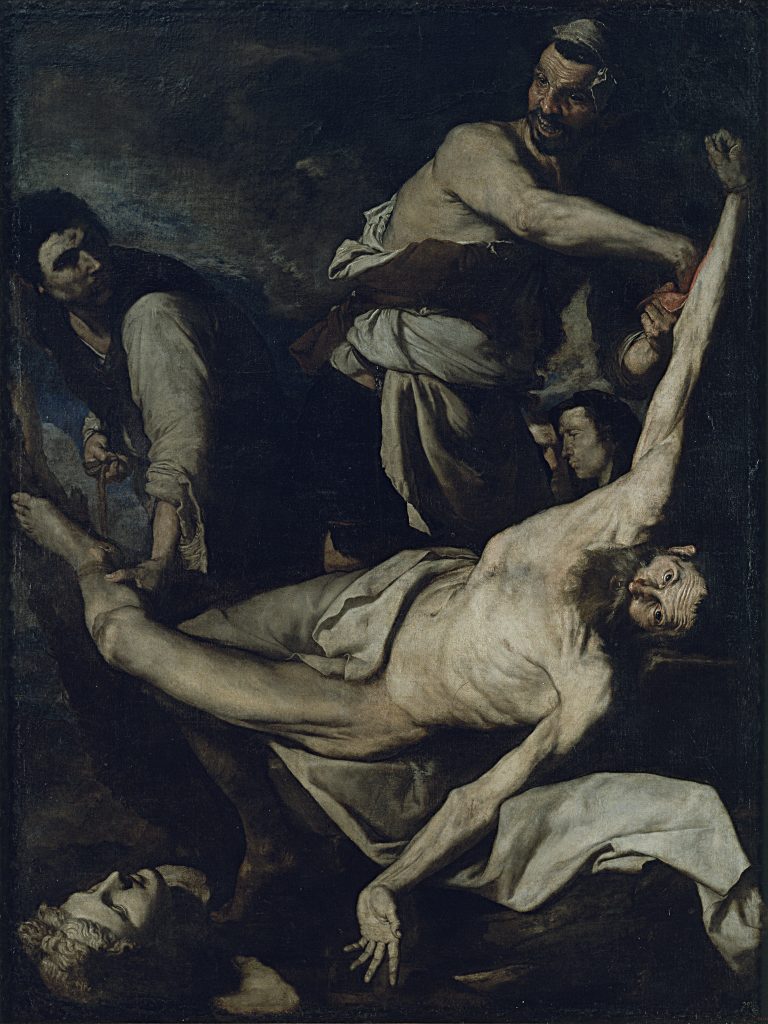
Ribera’s figures (often painting from a live model) are subjected to brutal contortions of pain and suffering, and produce a physical reaction in the body of the viewer. Starting with the story of St Bartholomew who was flayed alive for his faith, three versions of the Martyrdom of St Bartholomew (1644) are presented in the opening room of the exhibition, showing the martyrdom in hyper-real and stomach-churning style.
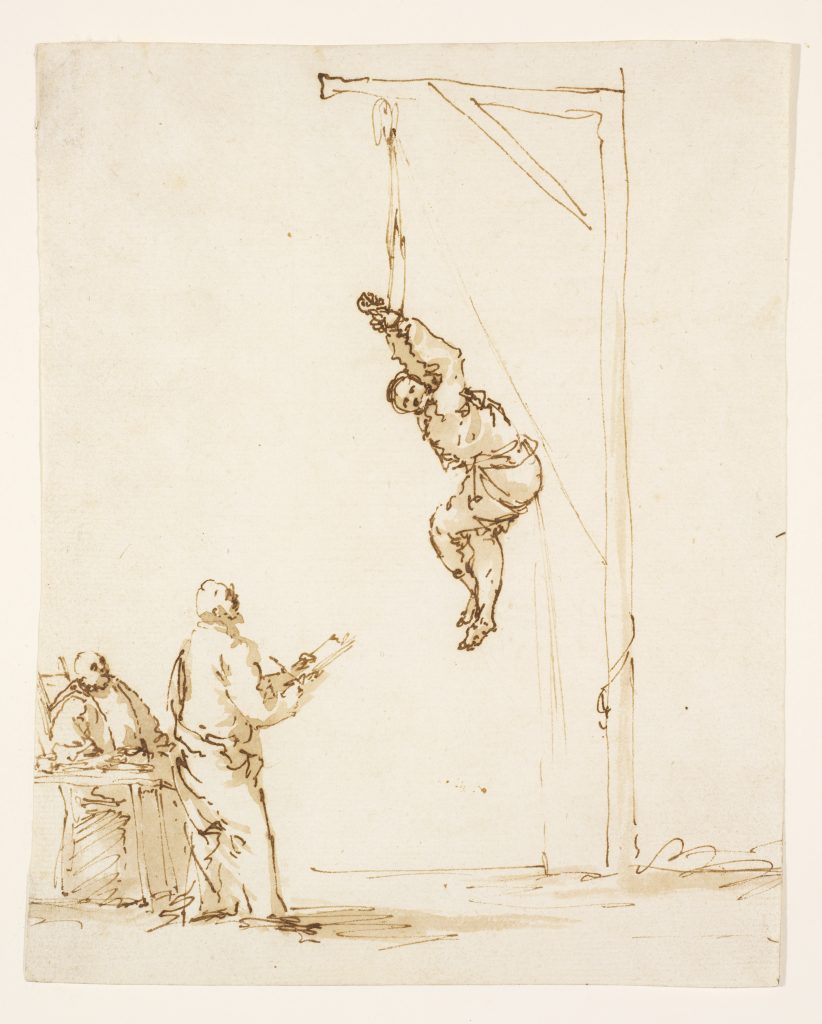
Having gained his first commissions in Naples, it is fascinating to imagine how the city may have had an influence on Ribera’s work. Overflowing in baroque swirls, huge gilded churches, artists and philosophers, it was also the scene of innumerable public executions — the Inquisition being particularly active at the time. Any European would have had copious access to such public spectacles, rendering the horror commonplace.
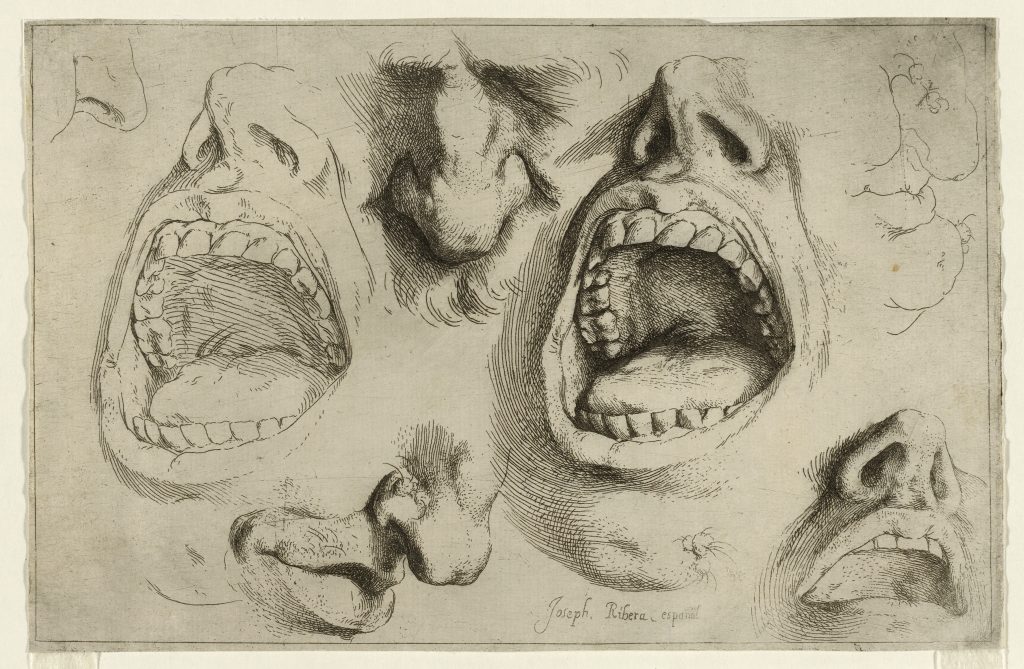
Making a small detour from the exhibition’s focus on violence, a room celebrating Ribera’s exploration of the five senses is a welcome respite, showcasing his skills as a draughtsman and further proving his ability to produce a powerfully physical response in the viewer.
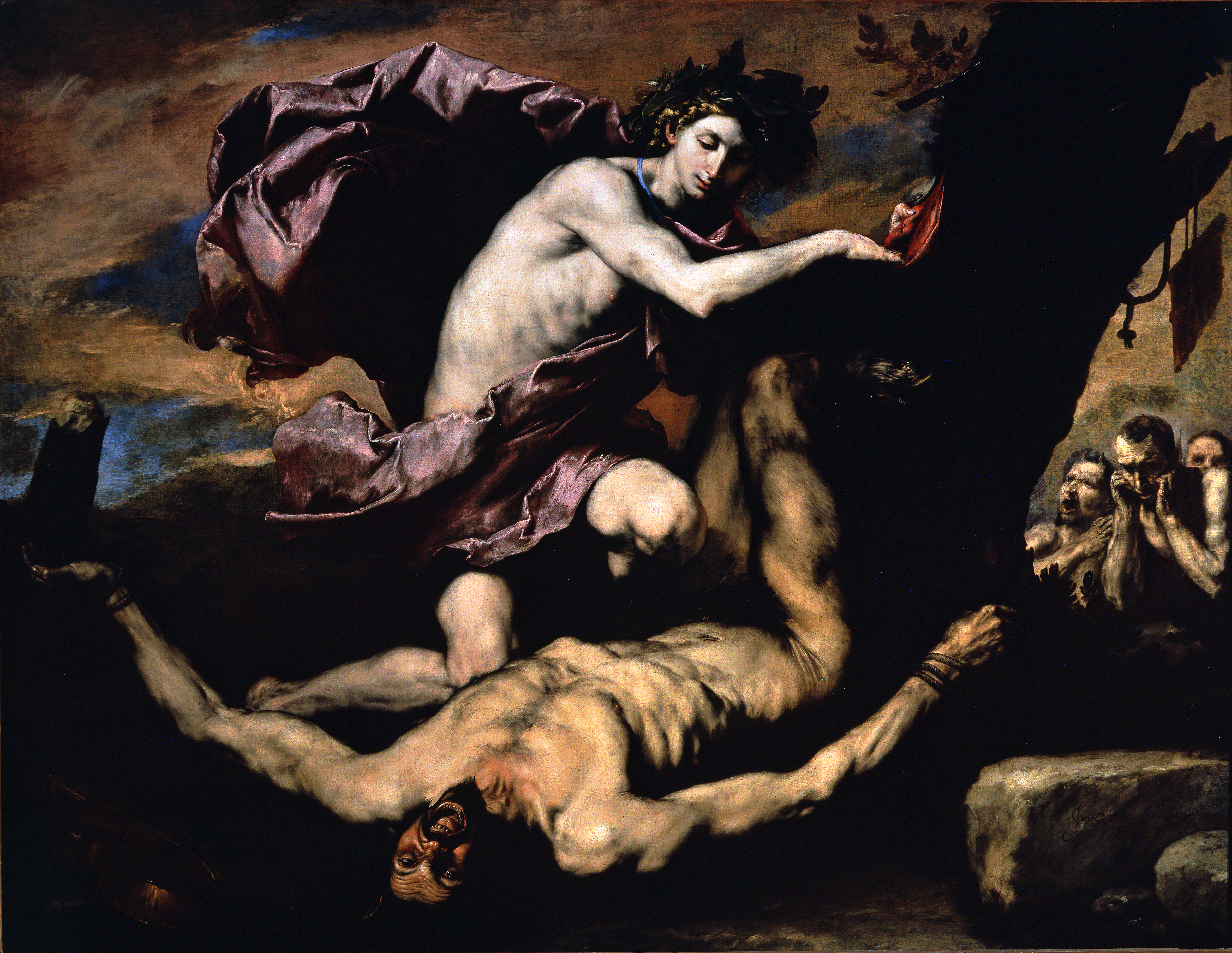
Closing the exhibition is the spectacular Apollo and Marsyas (1637) portraying the result of human hubris in bargaining with a god. Apollo flays Marsyas alive as punishment for losing a musical competition. Apollo’s serene, classical expression and billowing cloak contrast with Marsyas’ look of abject agony, but the masterful realism and composition create a spellbinding tableau, a perfect example of the dual nature of Ribera’s work.
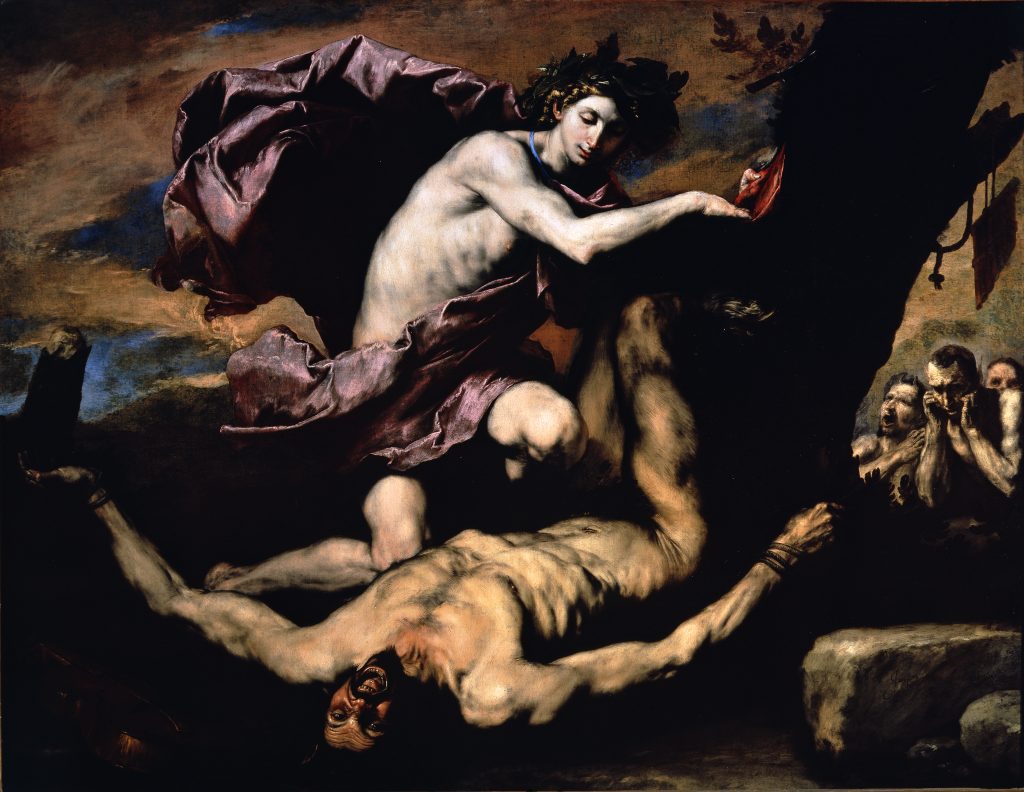
Initially it is not easy to engage with Ribera’s possible aims in depicting pain beyond the viewer’s own reactions to it, and the temptation is to view his work as simply sadistic — there is too much emotion for his interest to be merely aesthetic — but through his ability to create this connection to his viewer, Ribera communicates an unflinching engagement with the human feelings of suffering and pain, and compels his audience to do the same.
Ribera: Art of Violence will be shown at the Dulwich Picture Gallery until 27th January.
See here for more information about the exhibition and here for our review of Dane Hurst’s Animalis, a theatrical dance which responds to the images and themes in the show.


