

Company Concentric’s Play On is not just fun and games, but a performance that explores serious contemporary concerns through the lens of play, writes our contributor Eirini Diamantouli.
With endearing absurdity, Play On explores the culture of play and invites audiences to contemplate human interaction and connection. In this part-improvised, part-devised duet for contemporary piano and dance, the two elements are in constant communication; with Yanaëlle Thiran’s movement responding to and refracting Mikaela Livadiotis’ music, and vice versa. The lines between dancer and musician are often blurred as the performers endeavour to distract, confuse and complicate each other’s, and the audience’s, expectations. At pivotal moments Yanaëlle and Mikaela invade each other’s roles, marking how power and control shift and speaking to the give and take, push and pull of human relationships. The performers seek each other out through eye contact, remaining dutifully in each other’s vision, alternately provoking each other through physical touch. Their dialogue, articulated through music and dance, simulates the capricious characteristic of childhood play where in one moment the performers are complementing each other and in the next they are competing.
Although speaking to contemporary adult concerns, Play On is a story set very much in a child’s world. Adorned in the primary colours reminiscent of school days, the set (Sally Somerville-Woodiwis) and costumes (Akshy Marayen) are hugely effective in constructing this childish landscape. Indeed, it is as if the story unfolds within a toy-box: the now surreal, malformed and misshapen objects sprawled across the stage represent once favoured and now discarded toys. These objects not only create a fantastic and evocative landscape, but also contribute much to the narrative, often engaging the performers and helping them to illustrate notions of distraction and retreat.
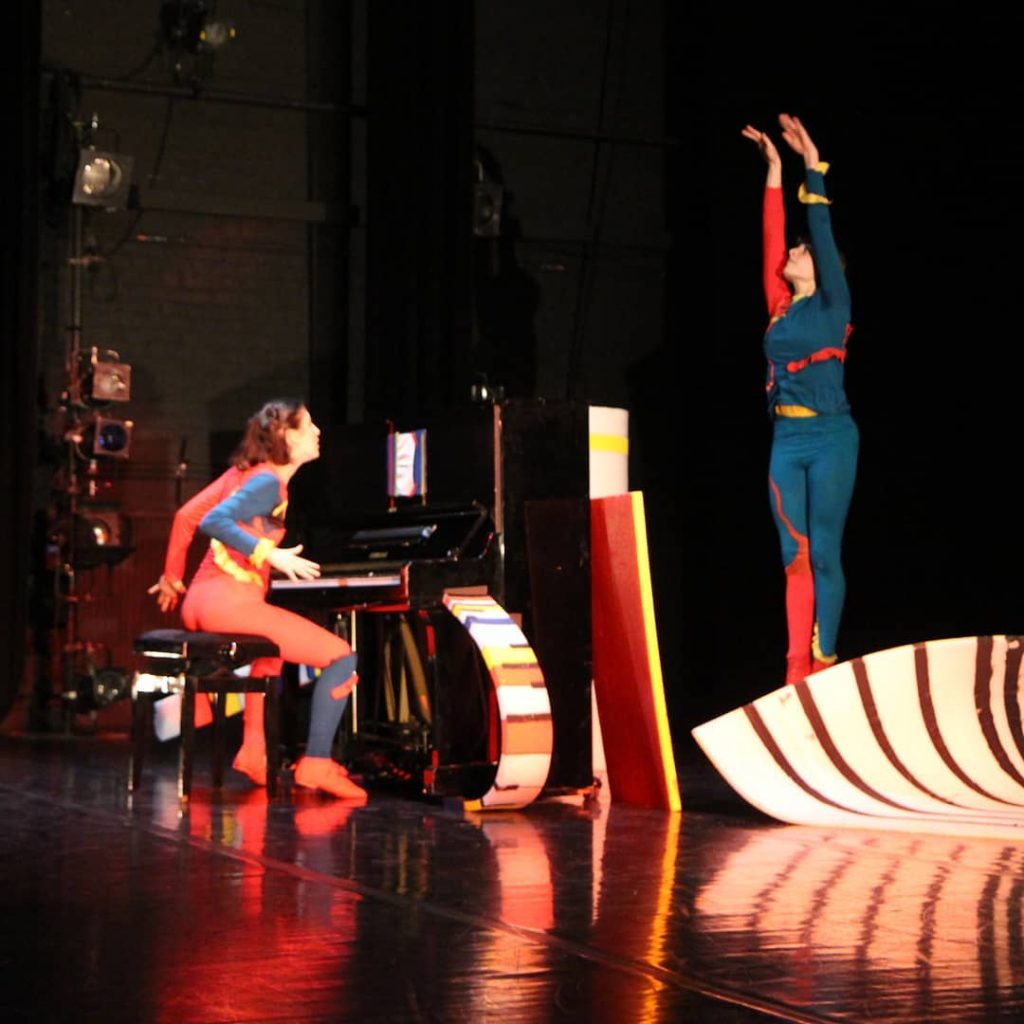
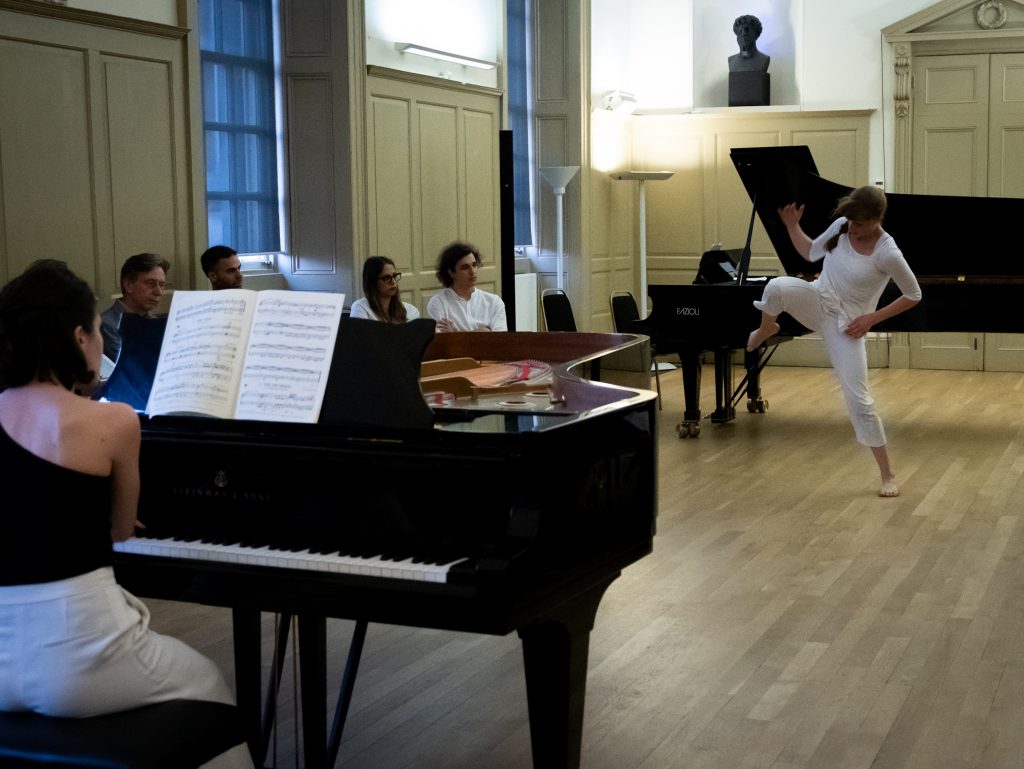
The greatest toy of all in this giant toy box is the piano. Mikaela deploys rich harmonic dissonances, chaotic rhythms and circus-like motives that are juxtaposed with fleeting moments of rich, expressive lyricism evocative of French Impressionism to create a bizarre and beautiful, if sometimes repetitive, sound world. This soundtrack helps to convey the playful, dislocated, varied, and fickle aspects of childish, and indeed adult interactions and exchanges. With strength and delicacy in equal measure, Yanaëlle navigates the stage and interacts with her physical and auditory world. With great technical control and a confident, if somewhat limited, choreographic language, she embodies the curiosity, excitement, impatience and changeability of youth. The episodic nature of the story, told through ten short vignettes, makes Play On occasionally hard to follow. However, it successfully mimics the juvenile attention span with each brief glimpse appearing and disappearing as quickly as a child plays with, and soon discards, a new toy. The same effect however, could have been achieved in fewer, and more distinctly varied acts. Brief, striking moments throughout Play On when the performers breach the fourth wall, looking apprehensively towards the audience, as if every onlooker exerts the punishing gaze of the inspecting parent or guardian, create a profoundly unsettling feeling for the viewer. This device, achieving great dramatic effect, could certainly have been explored further.
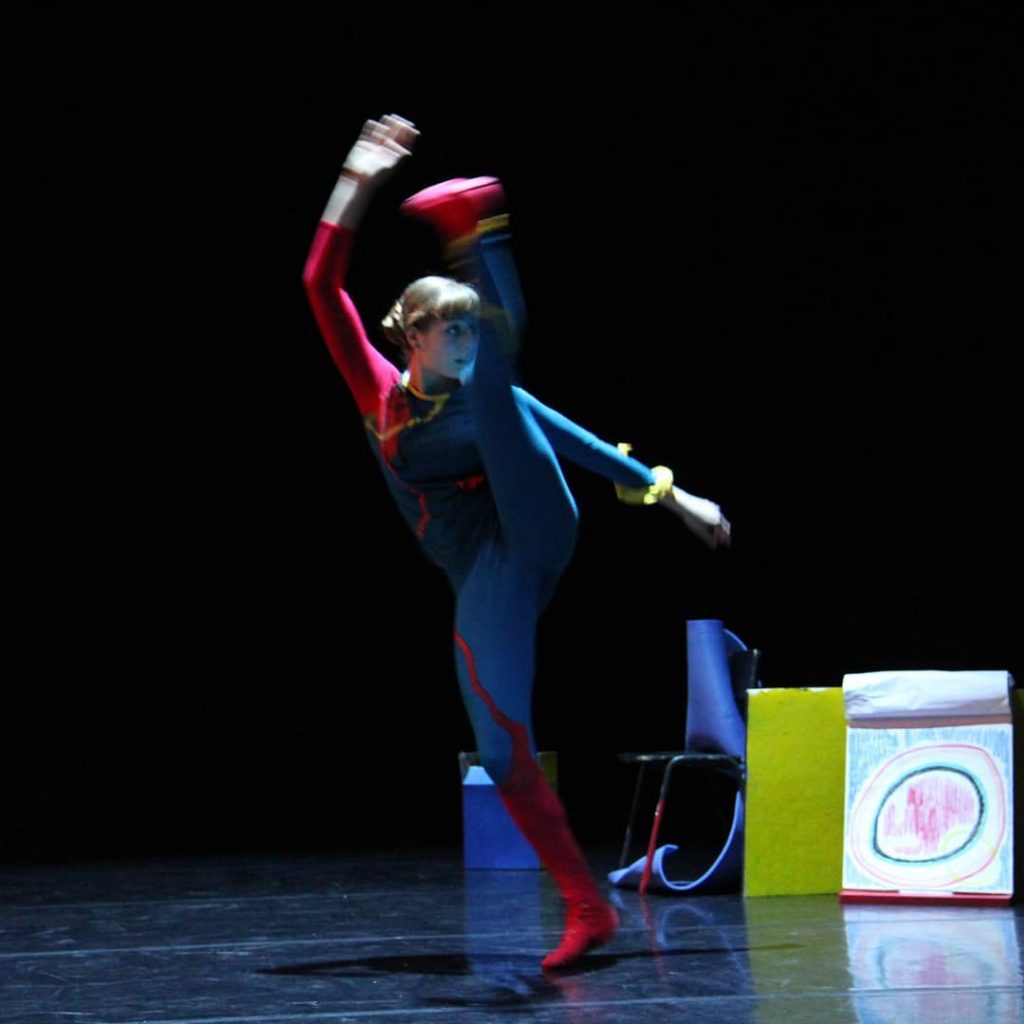
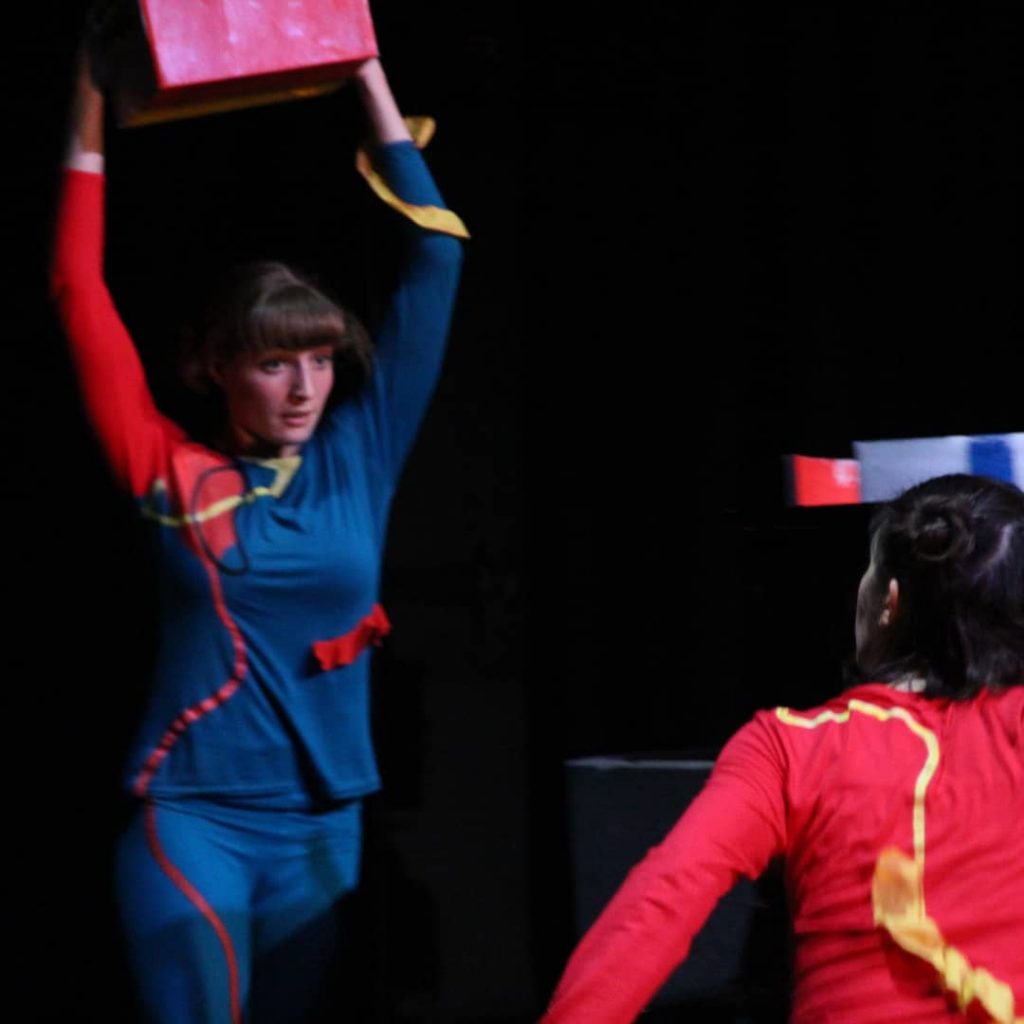
Play On’s narrative, communicated at the intersection of music and dance, leads us to consider the nature of human interaction and how it relates to childish behaviours, distractions and impulses. In the context of growing concerns that we are living in an age of distraction, which is aided and abetted by consumerism and an addictive manipulative digital culture that trades in the currency of our attention, the themes explored in Play On are well timed. The performance is brought to an arresting conclusion where the two performers engage in a powerful silent confrontation on centre-stage. With tantalising energy and chemistry, this final confrontation spotlights the intensity, complexity, and significance of perhaps our greatest weapon against an increasingly fractured and alienating world: human connection.
All images are by Madeleine Elliot for Company Concentric.
Play On was performed by Company Concentric as part of Resolution 2019 at The Place, London, on 23rd January. Click on the links for information about the performers, Yanaëlle Thiran, Mikaela Livadiotis and for the rest of The Place’s Resolution 2019 programme.


