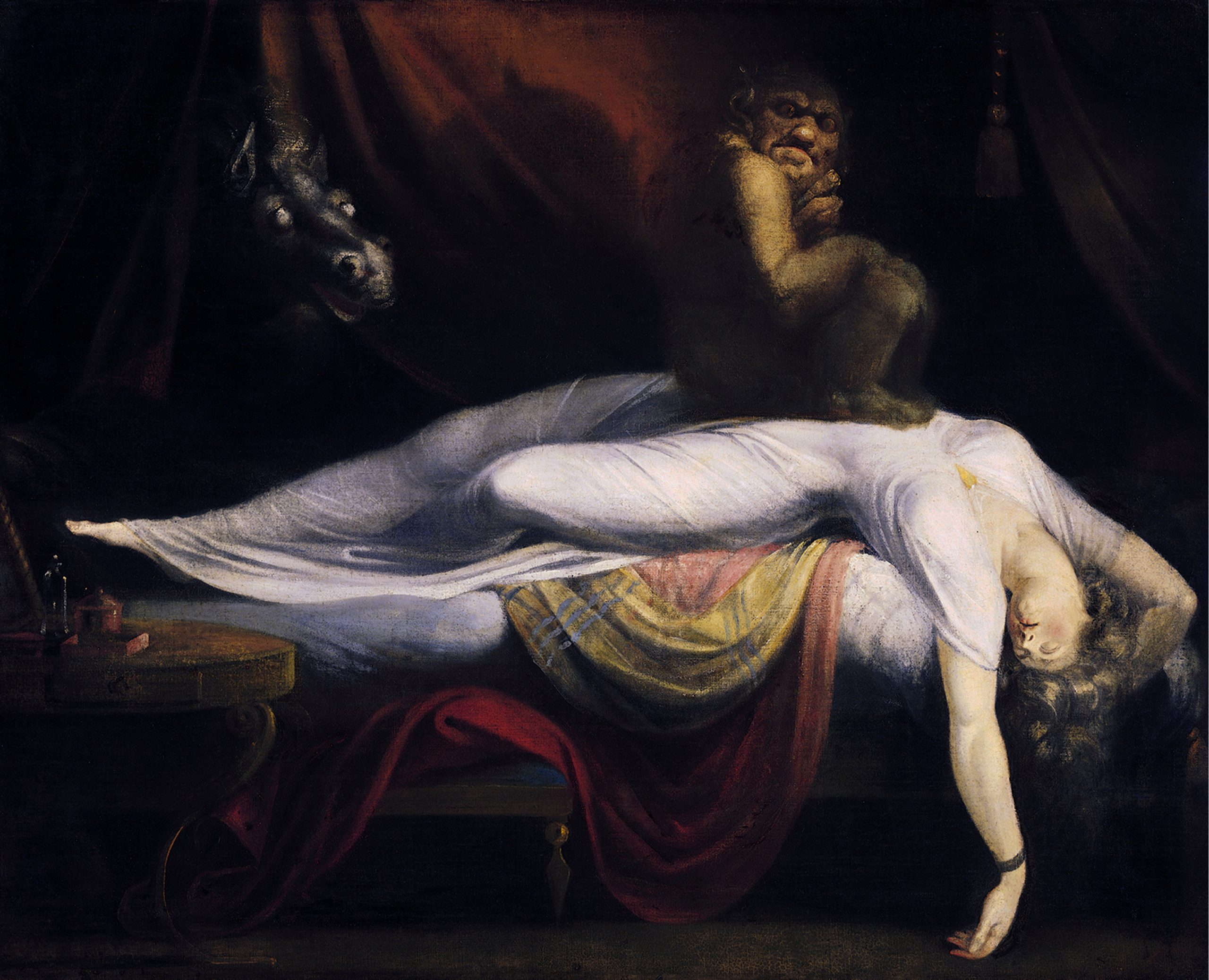
Delving into the rich traditions of gothic literature, sentimental fiction and old folk tales, Henry Fuseli’s The Nightmare, 1782, appears from another world. But not so, says Miriam Al Jamil, who recognises in the painting an awareness of human psychology foreshadowing that found in modern psycho-analysis, dream theory and psychiatry.
Reflecting on the life of Camille Claudel through Rodin’s 1884 bronze bust of the artist, Selin Genc considers her own experience of isolation and celebrates her autonomy even in the midst of lockdown.
Looking at the New Mexico desert, Georgia O’Keeffe found a new home. In the thirteenth Postcard piece, Emily Garbutt considers O’Keeffe’s vivid, evocative painting, Black Mesa Landscape, New Mexico/ Out Back of Marie’s II, 1930, and asks when she will have the opportunity, post-lockdown, to survey a foreign landscape.
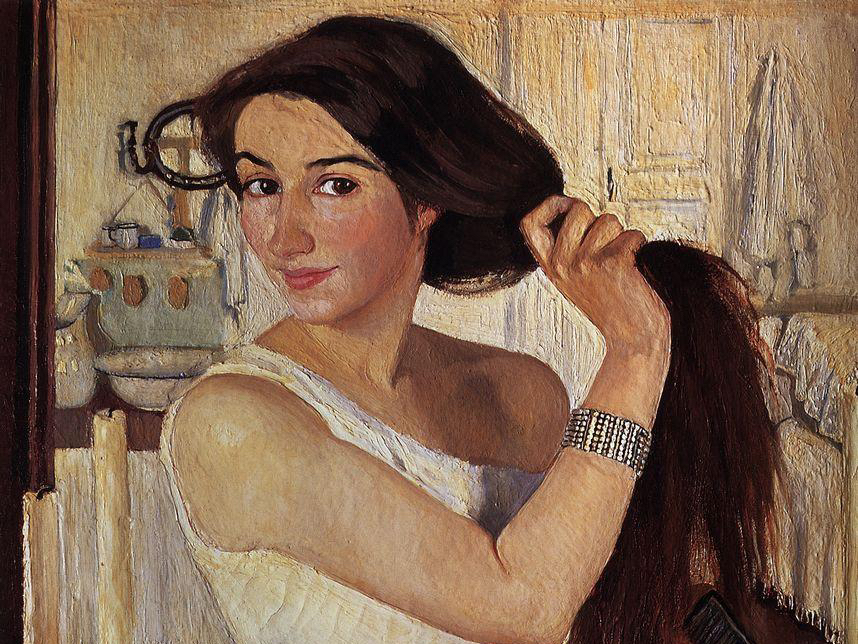
Sian Norris reflects on the female gaze as captured in Zinaida Serebriakova’s At the Dressing Table, 1909, and when looking at Dorothea Tanning’s Self-Portrait, 1944, she considers the lack of freedom we have during lockdown.
Isabel Radford reflects on one of Frida Kahlo’s best known works, Self-Portrait with Thorn Necklace and Hummingbird, 1940, and sees the artist as a source of empowerment for our current times.
In Otto Dix’s Portrait of the Journalist Sylvia von Harden, 1926, Lottie Whalen sees both an insouciant New Woman and Dix’s embodiment of a dangerously dissolute era. Recalling a recent encounter with the painting in Paris, she reflects on the freedoms we stand to lose in the time of Covid-19.
Toni Roberts discusses how Mona Hatoum’s radiant red sculpture, Hot Spot III, 2009, has become a relevant work of art during her time in lockdown and a metaphor for our cage-like existence.
On removing a postcard of Frida Kahlo from her wall, Rachel Ashenden began to reflect on past loves, the feelings postcards evoke and the liberation one can feel, even in lockdown, towards old relationships.
In these times of social distancing and remote learning, visual art can still offer us consolation. Here, as part of her second piece in a rolling self-conceived series, Rochelle Roberts reflects on Dorothy Cross’ sculpture, Virgin Shroud, 1993.