As someone who was already fighting a life-threatening illness, Tomilyn Hannah was familiar with difficulties of social distancing and self-isolation. But lockdown gave her an opportunity to encounter the kindness of strangers, make new friends and be part of a new community.
After an Erasmus exchange in Paris, artist and art historian Kathryn Cutler-MacKenzie discovered that translation is about the space between languages and voices; a space that affords us new connections, ideas and friendships.
Learning both English and Urdu at school, and teaching French after university, Naima Rashid initially felt dislocated from her “mother tongue” and land. But, on reading Urdu again, she’s discovered it’s ‘the space between languages’ that feels like home.
Little did Toni Roberts know that her decision to study Spanish at school would turn into a life-long love for a language that has since given her confidence, creativity and, above all, joy.
Recalling several occasions where her native tongue has been criticised, Juliane Beck became conscious not only of the sound, but the cultural and socio-political history attached to the German language. Here, she writes about learning to accept and appreciate how language is embedded in life.
Following a family bereavement, Stephanie Mamonto started to consider how empathy is conveyed online and how different languages enable or limit our expression of emotion.
On reading Emily Wilson’s translation of Homer’s Odyssey, Georgia Poplett started to consider the misogynistic history behind language and the way translated words have been used to harm and heal womxn.
When Majella Mark was left unable to speak because of health problems, she felt alone and excluded. But on discovering New York’s hearing impaired community, she made new friends and learned to communicate in a way she never had before.
In the first essay of her co-edited and co-conceived series, Disembodied Voices: Friendship during COVID-19, Sumaya Kassim reflects on the breakdown of a friendship, exploring feelings of abandonment, rejection and grief that led her to self-evaluate and cultivate new intimacy and care.
Millais’ painting, Ophelia, continues to inspire viewers and critics alike, but what if the heroine came back from the watery grave she was condemned to? Here, Hannah Hutchings-Georgiou considers the return of Ophelia in the artwork of Jada Bruney and Rolake Osabia, and the music visuals of Christine and the Queens.
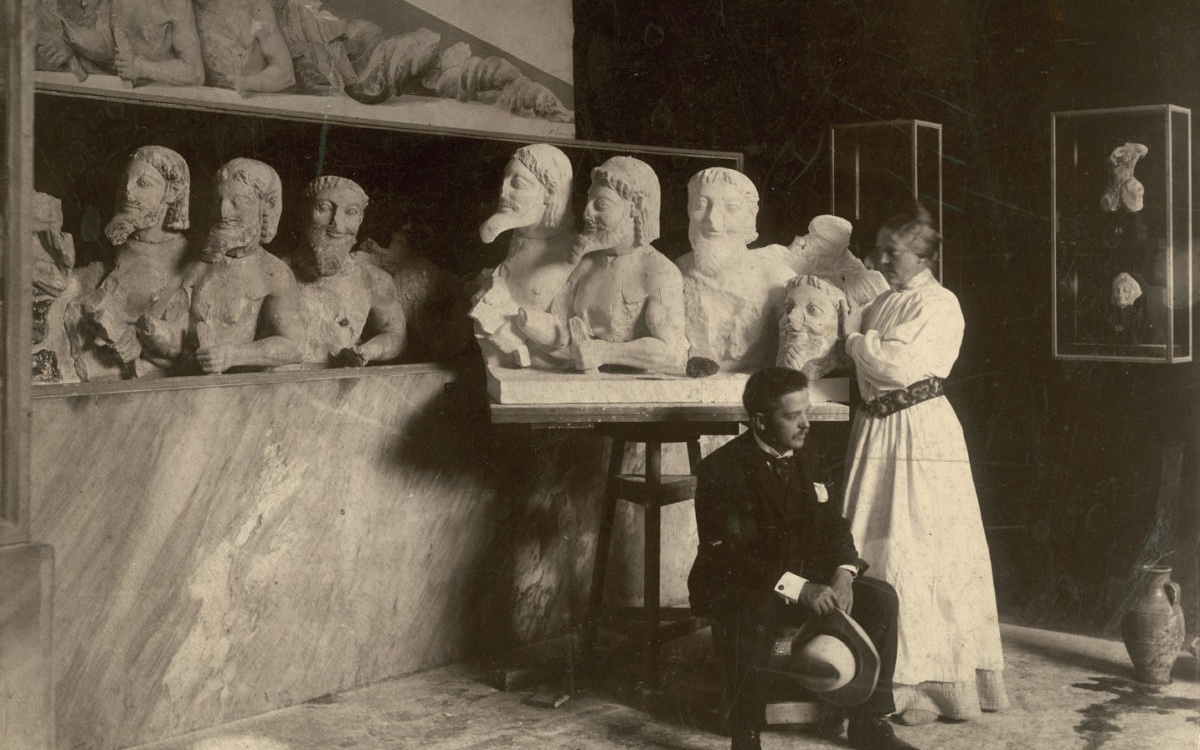
Amalie Smith’s exciting new novel, Marble, sensuously intertwines the story and discoveries of its titular heroine with those of pioneering sculptor Anne Marie Carl-Nielsen, who lived and worked 110 years earlier. In this preview, Marble reflects on Carl-Nielsen’s time in Athens and the new material reality open to her when separated from her lover.
Yen Ooi’s poem, ‘Mother Tongue’, is a bold and resolute response to those who project ideas onto a person’s skin and fail to see the individual for who they are, in all their cultural, linguistic and ethnic multiplicity.