Nina Mingya Powles’ exciting new collection, Magnolia, 木蘭, is a celebratory exploration of languages, and the cultures, experiences, and worlds that lie within them.
Yen Ooi’s poem, ‘Mother Tongue’, is a bold and resolute response to those who project ideas onto a person’s skin and fail to see the individual for who they are, in all their cultural, linguistic and ethnic multiplicity.
In Rojbîn Arjen Yigit’s powerful poem, ‘Daykêmîn (Mother)’, a child sits down to dinner and savours her mother’s stories of when she first arrived in Britain and had to navigate many cultural and linguistic barriers.
Jen Calleja’s novel, The Islets, is a timely and daring exploration of xenophobia, cultural exploitation, historical suppression and amnesia, and the politics of literary translation. In this preview, ‘The Unreliable Translator’, the main character, Hester Heller, interviews a renowned translator, uncovering more about his work than she intended.
Writer, translator and musician, Jen Calleja, talks to Elodie Rose Barnes about her journey into translation, working on the Booker International shortlisted novel The Pine Islands, her PhD and fairy tale-inspired pamphlet, Goblins.
Misleading in size and the simplicity of its prose, Adania Shibli’s Minor Detail is brutal in its exploration of political violence towards women and the normalisation and erasure of this when it comes to national memorialisation, writes Selin Genc.
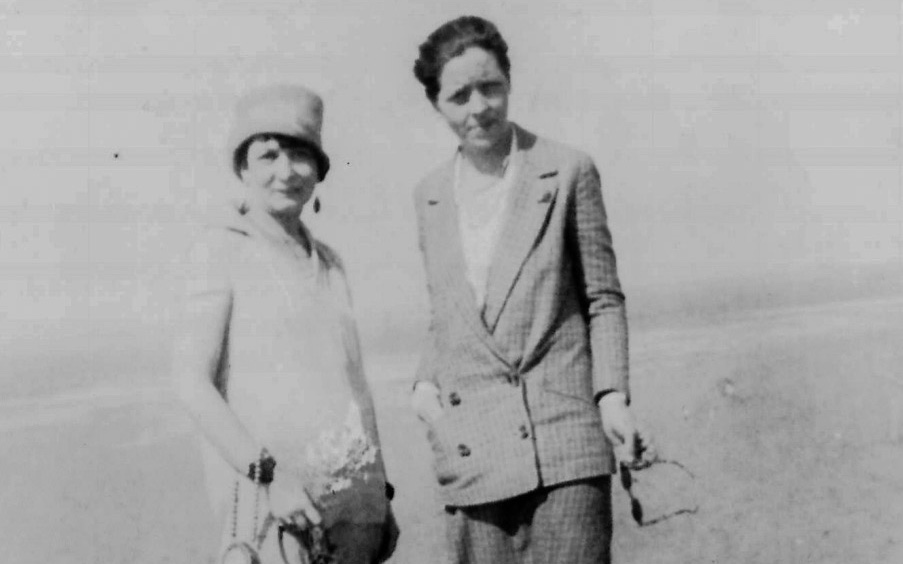
In her third chapter of the series, Elodie Rose Barnes walks the streets of Paris trying to uncover fragments of Djuna Barnes’ relationship with Baroness Elsa von Freytag-Loringhoven and her attempt to write a biography of the Dada artist’s life.
Musing on the meaning of a Malay proverb, Amy Hamizah asks whether the use of English in Brunei is a form of cultural imperialism or simply a marker of the educated younger generation.
Natasha Lehrer, award-winning translator and writer, talks to Elodie Rose Barnes about translation theory, Oulipo writers, the joy of translating poetry and the brilliance of French author Nathalie Léger’s prose.
In Kashiana Singh’s beautiful poem, ‘Pagri/Paggar/Pagadi/Pagg Turbans’, a father slowly folds his turban in front of his daughter, the intimate act of which is akin to the gradual unravelling of a poem.
In Annie McDermott’s superb translation of Selva Almada’s journalistic novel, Dead Girls, the story of three young women murdered in 1980s Argentina asks how long will the world stand by and remain silent about violence to women?
Ludovica Credendino remembers the difficulties of switching from Italian to English when writing creatively, and how she learned to fuse the two into her own unique language.